On this page
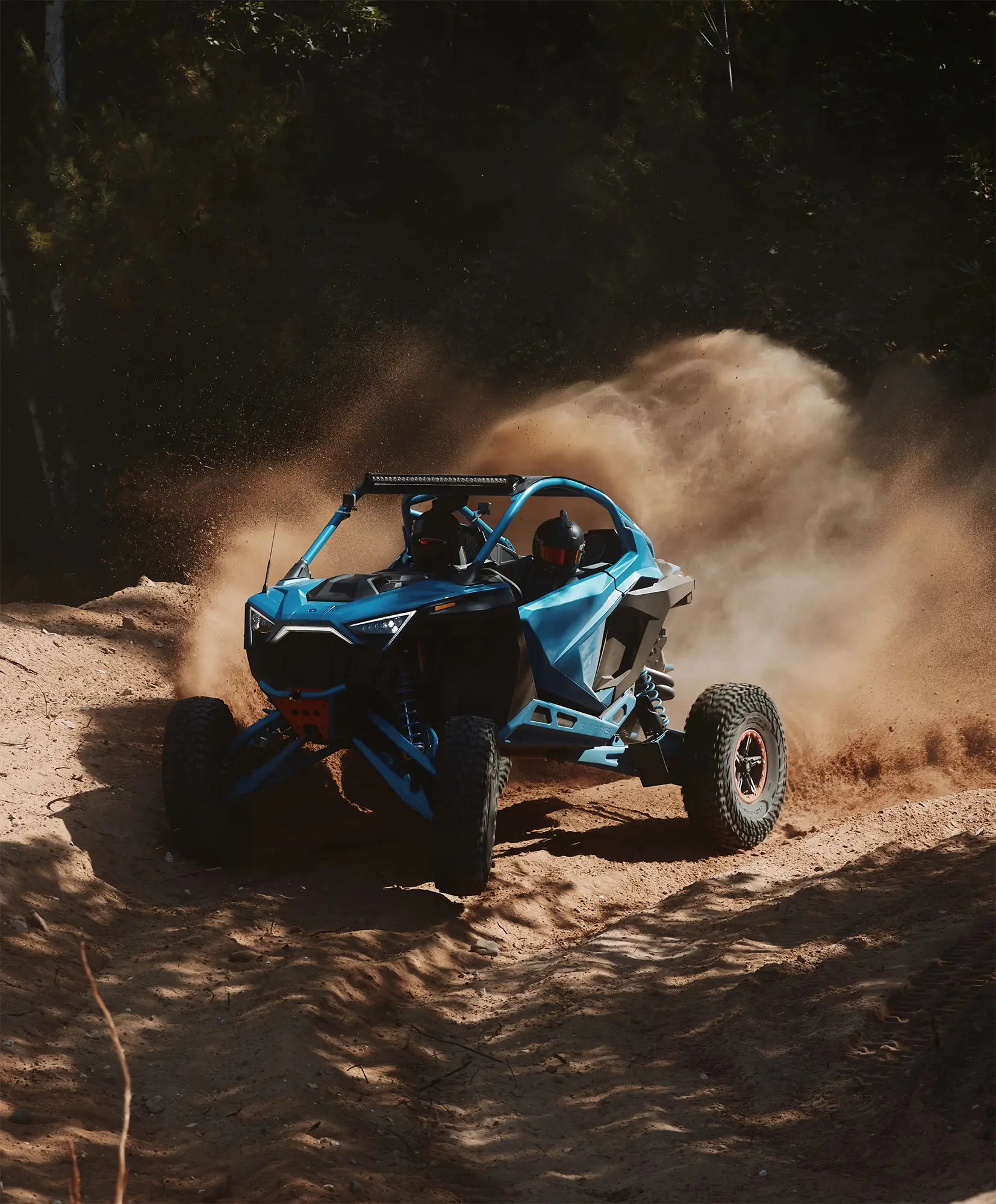
Polaris finally did it. Since the Pro R landed in 2022, the loudest request in the RZR world has been the same one: give us a turbo. With the 2027 RZR Pro R Boost, Polaris delivered — and they didn’t just bolt boost onto the existing package and call it done. They reengineered the systems around the engine to handle it, clutching included.
That last part is why this launch matters to us. KWI Clutching has spent years building CVT components for the Pro R platform, and a good chunk of that work has been aimed at the exact problems a turbo makes worse: heat, belt stress, and power transfer under sustained load. Here is what Polaris changed, why it matters, and where our Fusion Pro R clutching still takes the platform further.

What Polaris Changed for 2027
According to Polaris’ own launch materials, the Pro R Boost is built around a turbocharged version of the ProStar Fury 2.0L, rated at a claimed 275 horsepower. That is roughly 50 more than the naturally aspirated Pro R, and Polaris calls it the highest published output currently offered in a production side-by-side. Polaris also states the turbo system was engineered to hold power at altitude — up to around 10,000 feet — which is a real advantage if you ride the mountains or high desert.
The supporting hardware got attention as well. Polaris lists a dual-radiator cooling layout serving the engine, turbo, and transmission, along with a roof-mounted scoop that feeds the rear radiator with airflow that a windshield or accessories won’t disrupt. The driveline was reinforced with a stronger front drive, an upgraded transmission, and strengthened half shafts. On the suspension side, the Ultra trim adds active sway bar links that Polaris says adjust as often as 200 times per second.
All of that is solid engineering. But the part we watch closest is what happens between the crank and the wheels. Check out out Polaris Pro R collection!

The 2027 Polaris CVT Clutch System: OEM Design Moving Toward the Aftermarket
Polaris has always been one of the stronger OEMs when it comes to clutching, and the Boost keeps that streak going. Polaris describes the Pro R Boost clutch system as all-new and high-capacity, citing a larger clutch design, added cooling fins, and increased airflow, all aimed at reducing heat and extending belt life. Calibration and CVT tuning were updated alongside it, with new engine isolators to smooth out noise and vibration.
If that list sounds familiar, it should. Those are the same two levers KWI has been pulling on this platform for years: make the clutch bigger so it can hold more power, and move more air through it so the belt runs cooler.
A Larger Primary
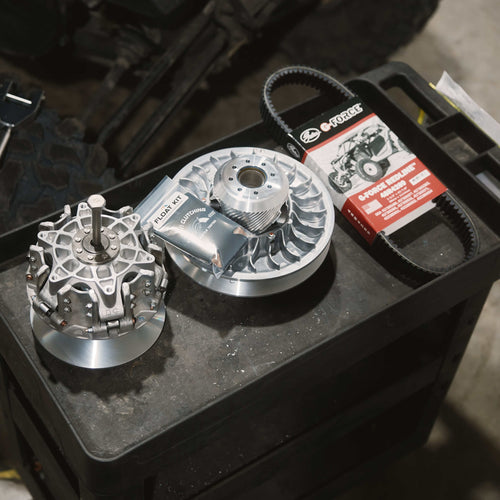
The Fusion Pro R Primary was built around an enlarged outer half. More surface area means more capacity to hold power, more thermal mass to absorb heat, and more area to shed that heat back into the air. On a high-horsepower Pro R, the drive clutch is where the belt takes its hardest beating, and sizing it up is the most direct fix available.
We have hundreds of Fusion Pro R Primaries in the field on both turbocharged and naturally aspirated Pro Rs, and the feedback has been consistent: better performance and better reliability under sustained load. Seeing Polaris grow the OEM primary’s outer half for the Boost is a strong signal that the aftermarket data was pointing the right direction.
A Larger Secondary with Airflow Designed In
In 2025 we released the Fusion Pro R Secondary, and it changed what was possible on this platform. Going to a larger driven clutch lets you run a longer belt, which improves both reliability and performance. It also gives you a tuning lever most people overlook: because you can run different belt lengths, you can effectively change your gear ratio without ever opening the gearbox.
The other half of that design is Groovix. The grooved sheave pattern pushes air across more surface area, essentially letting the clutch act as its own fan. Cooler clutches mean cooler belts, and cooler belts mean longer belt life and more consistent power delivery on long pulls.
Look at the new OEM secondary on the Boost, and you’ll see a larger clutch carrying a grooved surface pattern of its own. Call it convergent engineering or call it validation — either way, the direction is the same one we’ve been proving out for years, and every Pro R owner benefits from OEM design moving that way.

2026 vs. 2027 Polaris Pro R: What's Changed?
Feature |
2026 Pro R |
2027 Pro R Boost |
|
Horsepower |
225 HP |
275 HP |
|
Engine |
Naturally Aspirated |
Turbocharged |
|
Primary Clutch |
Previous Design |
Larger Capacity |
|
Secondary Clutch |
Previous Design |
Larger + Improved Cooling |
|
Belt Cooling |
Standard |
Increased Airflow |
|
Transmission |
Standard |
Reinforced |
Key Takeaways
-
275 HP demands more from the CVT.
-
Polaris improved clutch size and cooling.
-
Lower belt temperatures improve reliability.
-
Proper belt alignment reduces wear.
-
Aftermarket clutching offers greater tuning flexibility and performance for demanding conditions.

Where the Fusion Pro R Secondary Still Goes Further
A bigger, better-cooled secondary is a real improvement. But it doesn’t address the alignment problem, and alignment is where the Fusion Pro R Secondary separates itself.
In a conventional fixed-secondary setup, the primary pulls the belt toward the motor as it shifts. The belt ends up running at an angle instead of straight, and that twist has consequences. Our Fusion Pro R Secondary floats with the primary, keeping the drive belt in line at all times. Three things come out of that:
1. Lower belt temperatures. A twisted belt is a stressed belt, and that stress turns directly into heat. Keeping the belt straight removes a heat source instead of just trying to cool one down after the fact.
2. More efficient power delivery. Energy spent fighting misalignment is energy that never reaches the ground. The less work the engine has to do just to move the clutch system, the more of it shows up as wheel horsepower.
3. Even sheave wear. When the belt is pulled off-axis, it loads the outer half of the primary and the inner half of the secondary harder than the opposite faces. That uneven pressure produces uneven, accelerated sheave wear. Keeping the belt inline spreads the load across the whole system the way it was meant to be.
Roller System and the DR3 Groovix Helix
The Fusion Pro R Secondary also runs the KWI roller system alongside our Groovix helix design. The DR3 helix opens up more adjustability, improves belt grab, and sharpens backshift, which shows up as better throttle response coming out of corners and better belt grip when you get back into it. The DR3 Groovix profile carries the same airflow logic as the sheaves, pulling belt temperatures down even further.
Those are the details that matter once you’re running real power. A 275-horsepower machine doesn’t just need a clutch that survives — it needs one that holds calibration, backshifts predictably, and behaves the same on the tenth run of the day as it did on the first.
Who Should Consider Upgrading?
-
Riders who frequently tackle dunes
-
Riders who climb steep terrain
-
Riders who tow or carry extra weight
-
Riders with engine modifications
-
Riders in hot climates
-
Riders at high elevations
-
Riders looking to maximize belt life

What This Means If You’ve Got a Pro R Boost on Order
The Pro R Boost is going to be the benchmark of the UTV industry, and Polaris keeps pushing innovation at a pace other OEMs have struggled to match. This machine puts them further out front. It is also genuinely encouraging to see an OEM look at what the aftermarket has been proving in the field and build on it.
That said, a stock clutch package is always built to a compromise: it has to work for every buyer, in every climate, at every skill level, at a price that fits the build sheet. Our job is different. We build for the rider who is running the machine hard, at elevation, in the heat, in the dunes, or with more power than the factory ever planned for.
KWI Clutching will keep pushing what’s possible with the CVT system on this platform. We’re proud that innovations we brought to market are helping shape where the industry goes next, and we’re ready to take this new clutch system to its limits and build past them. Stay tuned for more high-performance products for your Pro R Boost — all built right here in the USA. In the meantime, the Fusion Pro R Primary and Fusion Pro R Secondary are ready for whatever you’re building today. Contact us to know further!
Source note: all 2027 RZR Pro R Boost specifications referenced above are as published by Polaris in its August 3, 2026 model-year announcement. Figures are manufacturer claims.